Phuket Currency & Money: ATMs, Exchange & Tipping Guide
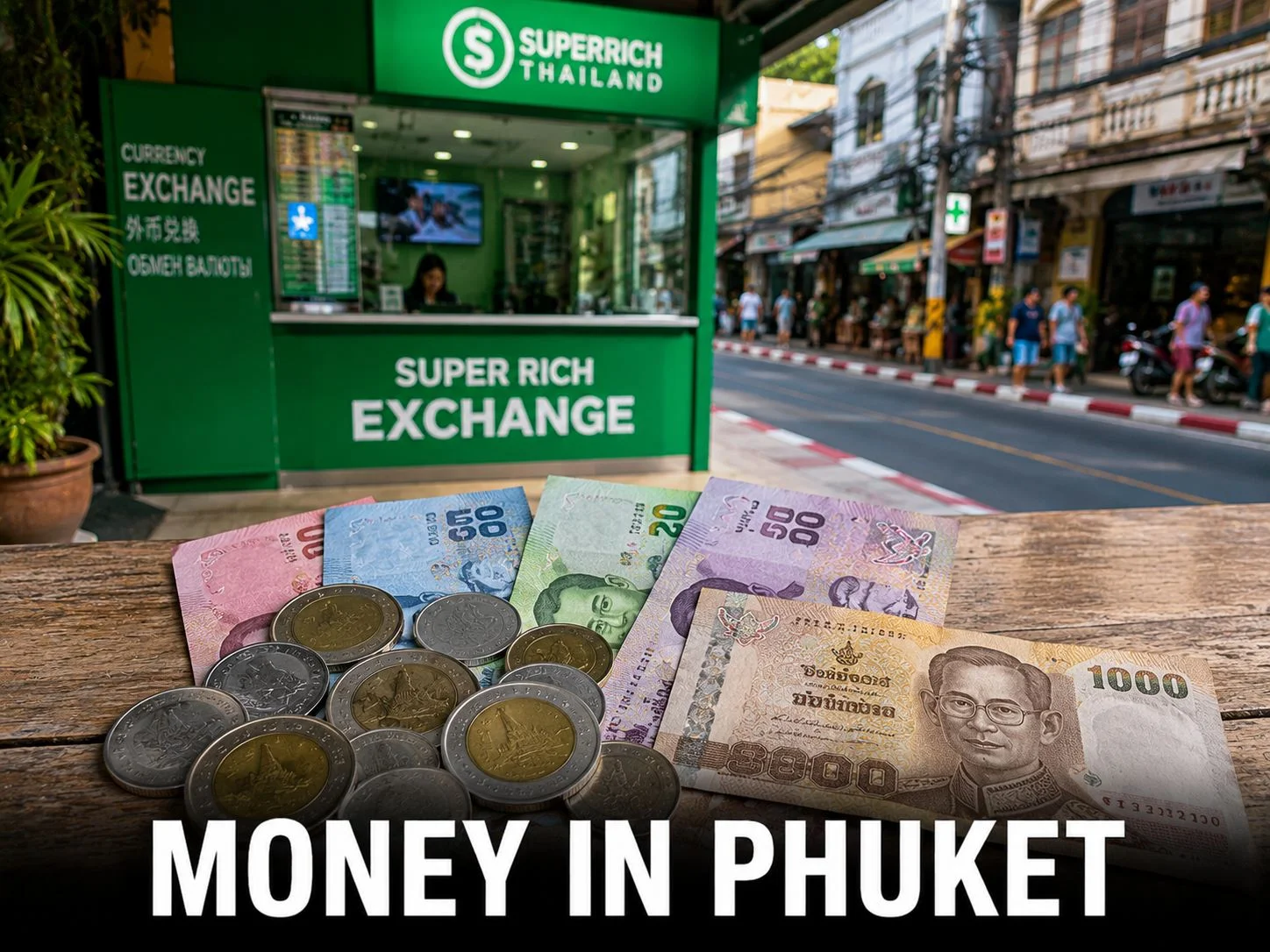
Understanding how money works in Phuket is one of the most practical things you can do before your holiday — and it can save you hundreds of baht every single day. Thailand's currency is the Thai Baht (THB), and while Patong is a well-developed tourist hub, knowing the best phuket currency exchange tips will help you avoid unnecessary fees and poor rates. Whether you're pulling cash from an ATM, visiting an exchange booth near Jungceylon, or working out how much to tip your taxi driver, this guide covers everything you need to know.
📝 In This Guide
Thai Baht Basics: Notes, Coins & What Things Cost
The Thai Baht (฿ / THB) is the only official currency in Thailand, and it is accepted everywhere in Phuket — from beachside vendors and street food stalls to luxury spas and department stores. Banknotes come in denominations of ฿20, ฿50, ฿100, ฿500, and ฿1,000, while coins come in ฿1, ฿2, ฿5, and ฿10 values. The ฿1,000 note is the most common denomination you'll receive from ATMs, so it's worth breaking them into smaller notes at a 7-Eleven or Family Mart when you can, as some local vendors may struggle to make change.
To give you a rough idea of daily costs in Patong: a street food meal costs ฿60–120, a smoothie on the beach is around ฿80–150, a tuk-tuk ride is ฿100–200, and a full Thai massage at a reputable spa might run ฿350–600 per hour. Mid-range restaurant meals near Patong Beach typically cost ฿250–500 per person with a drink. Daily budgets for a comfortable independent traveller tend to land between ฿1,500 and ฿3,500 per day, excluding accommodation.
It's worth noting that some tourist-facing businesses in Patong — particularly near Bangla Road — quote prices in USD or EUR. Always ask to pay in Thai Baht to benefit from the official exchange rate rather than a merchant-set conversion, which is almost always unfavourable to the customer.
Best Places to Exchange Currency in Patong
Patong is one of the most convenient places in all of Thailand to exchange foreign currency, with dozens of licensed booths operating throughout the area. The best rates in Patong are typically found at the currency exchange kiosks operated by SuperRich, Vasu Exchange, or the booth clusters just outside and inside Jungceylon Shopping Mall — conveniently located directly opposite Andatel Grande Patong Phuket. These booths are open long hours (often 10:00–21:00) and post their buy/sell rates on large display boards, making comparison easy.
Avoid exchanging money at the airport if you can. Suvarnabhumi and Phuket International Airport exchange counters typically offer rates 5–10% worse than street booths in Patong. If you need baht on arrival, only exchange a small amount — ฿1,000–2,000 — to cover your transport to the hotel, then exchange the bulk of your budget once you've checked in. The Jungceylon area, just steps from our hotel, has multiple competing booths, which helps keep rates competitive.
When exchanging, always count your money before leaving the booth and double-check the calculator display is oriented so you can see it clearly. Licensed booths in tourist zones are generally trustworthy, but it's still good practice. Major currencies accepted widely in Patong include USD, EUR, GBP, AUD, CNY, JPY, SGD, and HKD. Bring clean, unfolded banknotes — some booths reject worn or torn notes, especially older USD bills.
Using ATMs in Phuket: Fees, Limits & Tips
ATMs are plentiful throughout Patong — you'll find them inside Jungceylon, along Rat-U-Thit Road, near the beach road, and dotted throughout the walking streets near Bangla Road. All major Thai banks including Bangkok Bank, Kasikorn Bank (KBank), SCB, and Krungsri operate ATMs in the area, and all accept international Visa, Mastercard, Maestro, and Cirrus cards.
Here's the critical thing every traveller needs to know: Thai ATMs charge a flat foreign transaction fee of ฿220 per withdrawal, regardless of the amount withdrawn. This fee is charged by the Thai bank and is separate from any fees your home bank may charge. To minimise the impact of this fixed fee, always withdraw the maximum amount your bank allows per transaction — usually ฿20,000 or ฿25,000 depending on the ATM. Withdrawing ฿5,000 multiple times will cost you four times the fees compared to one large withdrawal.
When an ATM asks whether you want to be charged in your home currency or Thai Baht, always choose Thai Baht. The "Dynamic Currency Conversion" (DCC) option — where the machine offers to charge you in USD, EUR, or AUD — sounds convenient but uses a heavily marked-up exchange rate that can cost you an additional 3–7%. Selecting Thai Baht ensures your home bank applies its standard exchange rate, which is almost always better.
If you're planning a longer stay, consider opening an account with a travel-friendly bank such as Wise (formerly TransferWise), Revolut, or Charles Schwab before your trip. These accounts reimburse ATM fees and offer mid-market exchange rates, saving considerable money over a week or more in Thailand.
Cards & Mobile Payments in Phuket
Card acceptance has grown significantly in Phuket over recent years, particularly in Patong. Larger establishments — hotels, department stores like Jungceylon, sit-down restaurants, tour operators, and day spas — generally accept Visa and Mastercard without issue. American Express is accepted at upmarket venues but less commonly elsewhere. Contactless payments including Apple Pay and Google Pay are supported on many modern card terminals, particularly at larger chains.
That said, cash remains king for a huge portion of everyday transactions in Patong. Street food vendors, tuk-tuks, songthaews (shared taxis), local market stalls, beach massage operators, and small family-run restaurants almost always operate cash only. Carrying a mix of ฿20, ฿50, and ฿100 notes throughout the day makes life considerably smoother. A practical approach is to use your card for larger purchases such as tours and hotel extras, and rely on cash for daily street-level spending.
QR code payments via PromptPay are increasingly common in Thailand and used widely by locals, but as a foreign visitor without a Thai bank account, this system is generally not accessible. Some popular tourism-facing businesses accept WeChat Pay and Alipay, catering to Chinese visitors — but again, these require an existing account linked to a Chinese bank. For international tourists, the card-plus-cash approach remains the most reliable strategy.
Tipping Etiquette in Thailand
Thailand does not have a strong tipping culture rooted in tradition — unlike the United States, service staff are not reliant on tips to supplement a minimum wage. However, the tourism industry in Patong has developed its own tipping norms, and a small gratuity is genuinely appreciated by workers in the service sector, many of whom earn modest salaries. Knowing when and how much to tip is part of being a respectful and considerate visitor.
At restaurants, a tip of ฿20–50 for a casual meal or 10% for a nicer sit-down dinner is appreciated but not mandatory. Many upmarket restaurants add a 10% service charge to the bill — check before adding more. For Thai massage and spa treatments, ฿50–100 per hour is a kind gesture. Hotel housekeeping staff appreciate ฿20–50 left daily on the pillow or at checkout. Taxi and tuk-tuk drivers don't typically expect tips, but rounding up the fare is a friendly gesture — for example, paying ฿120 on a ฿105 ride.
Tour guides, boat trip crews, and elephant sanctuary or wildlife experience staff are among the most deserving of tips, as their work is physical, informative, and often underpaid relative to the experience they provide. For a half-day or full-day tour, ฿100–200 per person for the guide is appropriate. When in doubt, a smile and a genuine "khob khun krap/ka" (thank you) alongside a small tip goes a long way in Thai culture, where good humour and warmth are always valued.
One final note: never shortchange or haggle aggressively over small amounts. In a country where a ฿20 difference might be insignificant to a tourist but meaningful to a local vendor, maintaining a spirit of fairness and generosity makes your interactions more pleasant — and your trip more memorable. If you're exploring Patong's nightlife or enjoying a relaxing evening after a busy day of sightseeing, having a stash of small-denomination notes ready will serve you well throughout the night.
🏠 Stay in the Heart of Patong
Andatel Grande Patong Phuket sits directly opposite Jungceylon Mall, putting you steps away from the best currency exchange booths, ATMs, restaurants, and everything Patong has to offer. Freshly renovated in January 2025, our 3-star hotel offers rooftop pool access, free WiFi, and an 8.1/10 rating on Booking.com — rated 9.1/10 for location by 2,847+ guests.
Book direct for the best rates and let our 24-hour reception team help you with any money, transport, or travel questions during your stay.
Book Your Stay →